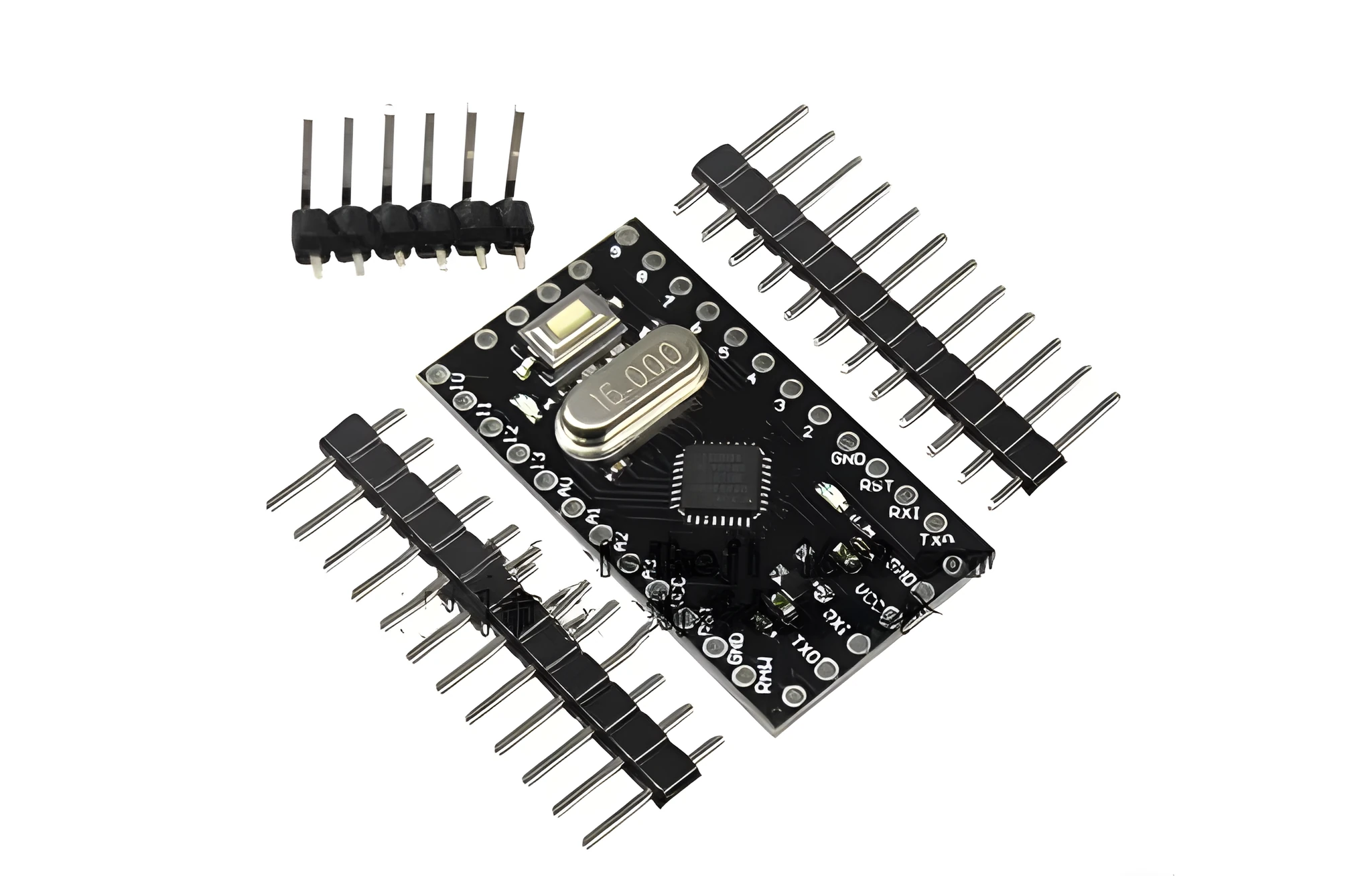
Arduino Mini Pro ATMEGA328P microcontroller board electronic building block template with 14 digital I/O pins, 8 analog inputs, 16MHz resonator for DIY electronics, microcontroller circuit board professional version


Arduino Mini Pro ATMEGA328P microcontroller board electronic building block template with 14 digital I/O pins, 8 analog inputs, 16MHz resonator for DIY electronics, microcontroller circuit board professional version
Arduino Mini Pro ATMEGA328P microcontroller board with 14 digital I/O, 8 analog inputs, and 16MHz clock
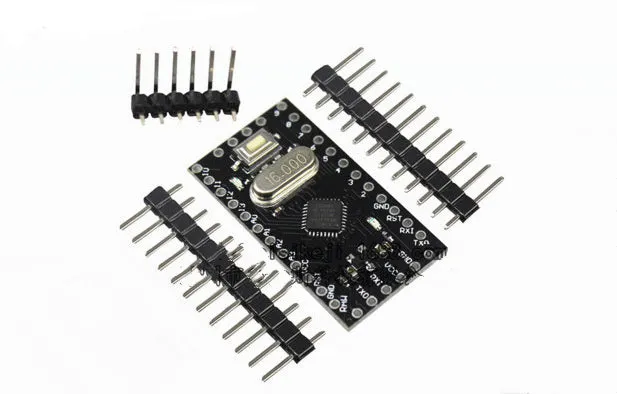
The Mini Pro professional version represents a compact yet fully-featured microcontroller development board designed for electronics enthusiasts, students, and professionals working on space-constrained projects. Measuring just 33.3mm by 18.0mm, this board packs the essential connectivity of larger Arduino-compatible platforms into a minimal footprint while retaining comprehensive input/output capabilities. With its Atmel Atmega328P-AU microcontroller at the core and a 16MHz resonator for precise timing, this board serves as a versatile foundation for embedded systems, IoT devices, robotics controllers, and educational electronics kits where physical space matters as much as functionality.
Features and Construction

The Mini Pro board's design prioritises practical connectivity within its compact dimensions, offering the I/O flexibility typically associated with larger development boards. Its construction includes mounting hole pin headers that allow secure mechanical attachment in final projects or prototype enclosures, while the inclusion of a physical reset button provides straightforward recovery during development cycles. The board's layout arranges the 14 digital and 8 analog pins along its edges for accessible connection to peripherals.
Material and Build
Constructed on standard FR4 PCB material with copper traces, the Mini Pro board hosts an Atmel Atmega328P-AU microcontroller that serves as its processing unit. This specific microcontroller variant provides the same architecture found in many Arduino boards, ensuring compatibility with existing code libraries and development tools. The board includes a 16MHz resonator rather than a crystal oscillator, offering improved stability in varying environmental conditions while maintaining precise timing for time-sensitive applications. Surface-mount components and through-hole pin headers create a hybrid assembly suitable for both prototyping and permanent installation.
Size and Practical Fit
With dimensions of 33.3mm by 18.0mm, the Mini Pro occupies approximately one-quarter the area of a standard Arduino Nano board, making it suitable for projects where space conservation is critical. This compact footprint allows integration into wearable electronics, small robotics, modular systems, or educational kits where multiple boards might operate in proximity. The small size does not compromise connectivity, as all 22 I/O pins remain accessible along the board's perimeter, with clearly labelled designations (D2-D13, RX, TX, A0-A7) matching standard Arduino pin mapping conventions for straightforward migration from other platforms.
Uses and Placement

The Mini Pro's combination of compact size and comprehensive I/O makes it applicable across multiple domains, from professional prototyping to educational workshops. Its support for serial download simplifies programming workflows, while the flexible power options accommodate various deployment scenarios. The board's design acknowledges that microcontroller projects often evolve from temporary prototypes to semi-permanent installations, hence the inclusion of mounting features alongside development-friendly accessibility.
Event or Professional Use
In professional or event contexts, the Mini Pro serves as an embedded controller for interactive installations, data logging systems, or distributed sensor networks where multiple units must operate autonomously in confined spaces. The 6 PWM outputs enable precise control of lighting elements, motor speed, or audio signals in artistic or display applications. Its serial communication capabilities allow coordination between multiple boards or data transmission to central logging systems, while the external power support from 3.3V to 12V DC facilitates integration with existing power infrastructures in venues or industrial settings.
Everyday Home Use
For home electronics enthusiasts, the board provides a capable platform for automation projects, environmental monitoring, or custom controller builds without dominating enclosure space. The 8 analog inputs can interface with temperature, light, humidity, or soil moisture sensors for smart home applications, while the digital outputs control relays, indicators, or small actuators. The option for 9V battery power enables portable or temporary installations without requiring complex wiring, suitable for experimental setups, educational demonstrations, or temporary monitoring solutions that might later be redesigned with different microcontrollers.
Benefits and Buying Value
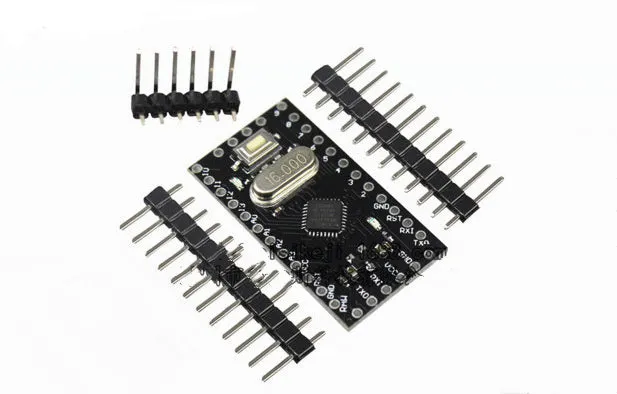
The Mini Pro's value proposition centres on delivering substantial I/O capabilities within minimal physical dimensions, reducing the compromise between functionality and footprint that often challenges compact electronics designs. By providing standard Arduino-compatible pinouts and communication protocols, it maintains compatibility with extensive existing code, libraries, and community knowledge while occupying significantly less space than traditional development boards. This balance makes it particularly suitable for projects where the microcontroller represents one component among many in a densely packed assembly.
Reuse and Low Maintenance
The board's design facilitates reuse across multiple projects through its standard pin headers that accept common jumper wires or direct soldering for permanent connections. The Atmega328P microcontroller can be reprogrammed repeatedly via serial download, allowing the same hardware to serve different functions in successive projects. With no moving parts and solid-state construction, the board requires minimal maintenance beyond ensuring clean connections and appropriate power supply, while its modest power consumption reduces thermal management concerns even in enclosed installations.
Why Choose This Product
This Mini Pro board offers a specific combination of compact dimensions (33.3mm x 18.0mm) and comprehensive I/O (14 digital pins with 6 PWM plus 8 analog inputs) that addresses projects where space constraints previously forced compromises on functionality. Unlike larger development boards that leave unused space in small enclosures, or minimalist boards that sacrifice connectivity, this product delivers measurable specifications within a precisely defined footprint. The inclusion of both mounting features and accessible pin headers supports projects through prototyping to final implementation stages without requiring board replacement as designs mature.